Mangrove Restoration and Sustainable Management in Central America
Morphological, physiological adaptations and propagation strategies vital for active restoration and monitoring of Central American mangroves.
Morpho-Physiological Adaptations of Coastal Species
Central America’s mangroves are coastal ecosystems of immense ecological and socioeconomic value, serving as natural barriers against storms and crucial habitats for vast biodiversity. Human intervention in these environments, beyond mere observation, falls under what could be termed specialized “gardening”: the restoration, conservation, and sustainable management of these unique forest formations. Understanding the specific characteristics of these biomes is essential for any support or recovery effort.
The success of mangrove vegetation in extreme environments is attributed to specific morphological and physiological adaptations. The main species present in Central America, such as Rhizophora mangle (red mangrove), Avicennia germinans (black mangrove), Laguncularia racemosa (white mangrove), and Conocarpus erectus (button mangrove), exhibit unique strategies. Red mangroves, for example, develop prop roots that elevate them above the water, facilitating gas exchange and providing support in unstable soils. Black mangroves, on the other hand, possess pneumatophores, root structures that emerge from the soil to capture oxygen in anoxic substrates. Salinity tolerance is managed through salt glands in the leaves or salt exclusion at the root level. These adaptations are fundamental to their survival in intertidal environments with fluctuating salinity and soil oxygen levels.
The propagation of these species is equally fascinating. Vivipary, characteristic of red and black mangroves, means that seeds germinate while still attached to the parent plant, developing a propagule that detaches and floats until it finds a suitable location to root. This process ensures a high initial survival rate and is a key factor in the natural dispersal and resilience of these ecosystems. Recent studies on mangrove population genetics are revealing connectivity patterns that inform best practices for propagule collection and genetic restoration, ensuring the diversity and adaptability of new plantings.
Viviparous Propagation and Genetic Connectivity
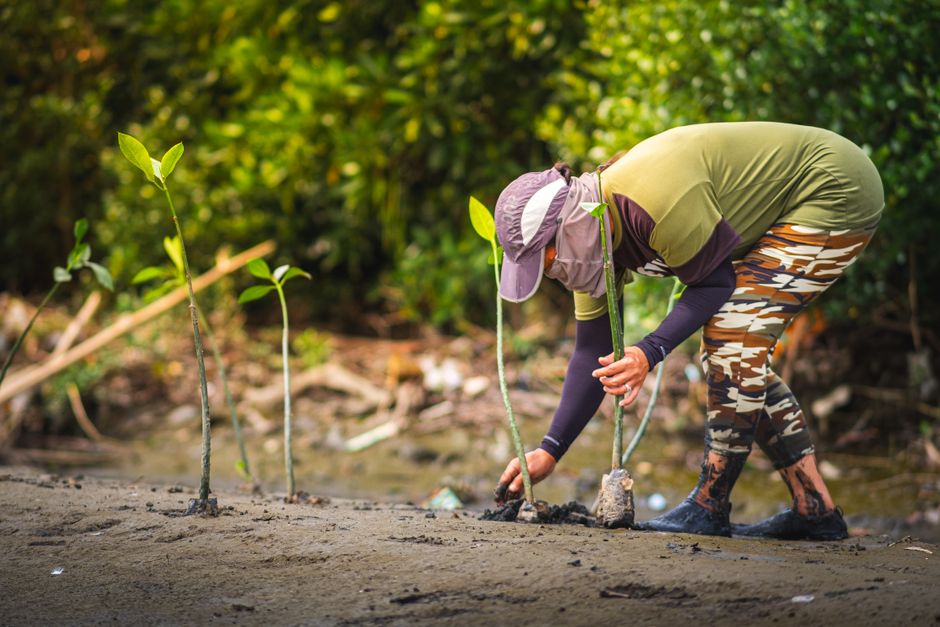
Active mangrove restoration demands meticulous planning and the application of appropriate propagation techniques. The first step involves collecting mature propagules from healthy trees in nearby donor areas, ensuring local genetic diversity. These propagules can be planted directly at the restoration site or grown in temporary nurseries. Nurseries, often established in areas protected from direct wave action, allow propagules to develop a more robust root system before final transplanting, significantly increasing survival rates.
Planting site selection is critical. A detailed hydrological analysis is indispensable for understanding tidal patterns, salinity, and sedimentation. This allows for the identification of optimal zones for each mangrove species, as each has specific preferences for flooding and substrate. Planting techniques include manually inserting propagules into the sediment or using stakes to secure larger seedlings. The implementation of coastal bioengineering, which uses natural materials to stabilize sediment and create favorable microhabitats, represents an innovation in protecting young seedlings from erosion and hydrodynamic stress. Drone technology is emerging as a promising tool for mapping degraded areas and assessing mangrove health, and even for seeding propagules in hard-to-reach zones, optimizing restoration efforts.
The execution of mangrove restoration projects involves a holistic approach that goes beyond simple planting. Often, it is necessary to restore the original hydrology of the site, which may involve removing embankments or reopening channels to allow natural seawater flow. Without adequate hydrology, mangrove plantings are doomed to fail. The participation of local communities is a fundamental pillar in these projects, not only for their empirical knowledge of the environment but also to ensure long-term sustainability and ownership of the initiatives. Citizen science programs allow local inhabitants to monitor seedling growth and report incidents, strengthening the bond between the community and the ecosystem.
Nursery Design and Transplanting Techniques
Post-planting monitoring is essential to evaluate project success. This includes tracking seedling survival rates, growth (height, stem diameter), and the evolution of vegetation cover. The integration of mangrove restoration into climate change action frameworks is a global trend. These ecosystems are recognized for their capacity to sequester large amounts of carbon, a concept known as “blue carbon.” Restoration projects not only contribute to biodiversity and coastal protection but also offer significant potential for climate change mitigation and the generation of carbon credits, incentivizing new investments in their conservation.
Mangroves provide an invaluable range of ecosystem services. They act as nurseries and feeding grounds for numerous species of fish, crustaceans, and mollusks, sustaining artisanal fisheries vital to local economies. Their dense root network stabilizes sediment, preventing coastal erosion and protecting human communities from the effects of storms and sea-level rise. Furthermore, they filter pollutants from the water, improving water quality in estuarine areas.
However, these ecosystems face significant challenges, including deforestation for aquaculture, agriculture, urban development, and pollution. Climate change exacerbates these pressures, with rising sea levels threatening to drown mangroves that cannot migrate inland. Current research focuses on developing more resilient mangrove varieties and identifying the best strategies for their adaptation and resilience in the face of these changes. The implementation of coastal permaculture and marine agroforestry approaches, which integrate food production with ecosystem restoration, represents an innovative pathway for coexistence between human development and mangrove conservation.
Bioengineering and Remote Monitoring in Restoration
Mangrove “gardening” in Central America is, therefore, a complex and multifaceted discipline that combines science, technology, and community participation. It is not just about planting trees, but about restoring a vital ecological balance, ensuring the survival of these coastal guardians against growing environmental and anthropogenic threats.
Tags: Ecological Restoration, Central American Mangroves, Coastal Biodiversity, Blue Carbon, Plant Propagation, Marine Ecosystems, Environmental Sustainability Category: Ecology and Conservation
Related Articles
Eugenia pyriformis: Propagation, Agronomic Management, and Cultivation Potential
Establishing Uvaia (Eugenia pyriformis): Edaphoclimatic requirements, propagation methods, agronomic management, and plant health.

Rooting Cuttings: Physiological Mechanisms and Plant Propagation Protocols
Understand the physiology of rhizogenesis and rooting protocols to optimize plant propagation in horticulture and urban agriculture.

Egyptian Garden Design: History & Sustainability
Recreating modern Egyptian gardens: symmetry, water, adapted flora, and architecture, integrating sustainability and water efficiency.

Phragmites australis: Ecology, Management & Biotech in Wetlands
Soil stabilization, water filtration, and habitat by Phragmites australis. Restoration techniques, bioenergy, and phytoremediation.