Optimizing Home Microgreen Cultivation: Selection, Environment, and Harvest
Analysis of substrates, LED lighting, immersion watering, and harvesting methods for microgreens, maximizing their nutritional value and sustainability.
Microgreen Variety and Substrate Selection for Home Cultivation
The incorporation of microgreens into the home diet represents a growing trend for those seeking concentrated nutrients and intense flavors. These young vegetables, harvested at an early growth stage, offer a superior nutritional profile compared to their mature counterparts, making them an ideal addition to any meal. Growing microgreens at home not only provides constant access to fresh, organic produce but also aligns with the principles of urban agriculture and food self-sufficiency, practices of increasing relevance today.
Successful microgreen production begins with the proper selection of seeds and substrate. For seeds, it is crucial to opt for organic, chemically untreated varieties specifically intended for microgreens, as their germination rate and health are determining factors. Popular varieties include broccoli, radish, mustard, arugula, and a wide range of brassicas and asteraceae that offer diversity in flavor and texture. Acquiring seeds from reliable suppliers ensures varietal purity and the absence of pathogens.
Regarding the substrate, its composition is fundamental for optimal root development and adequate moisture retention. A light, well-aerated mix, such as coco coir, peat moss, or a combination of these with perlite or vermiculite, is ideal. These materials provide a sterile environment and efficient drainage, preventing waterlogging and the development of fungal diseases. Recently, there has been a trend towards biodegradable and compostable substrates, minimizing post-harvest environmental impact. Current research highlights the effectiveness of inert substrates for precise nutrient control in hydroponic microgreen systems, an innovation that optimizes water and fertilizer use.
Environmental Parameters and Optimal Photoperiod
Controlled environmental conditions are crucial for vigorous microgreen growth. The ideal temperature ranges between 18 and 24 °C (65-75 °F), a range that favors germination and vegetative development. It is important to maintain constant, but not excessive, relative humidity to prevent fungal proliferation. Adequate ventilation in the growing space prevents moisture buildup and improves air circulation, which is vital for seedling health.
Light intensity is a critical factor. After germination, microgreens require an intense light source for 12 to 18 hours daily. Direct sunlight can be sufficient if you have a space with adequate orientation, but to ensure uniform growth and prevent etiolation (excessive stem stretching), full-spectrum LED grow lights are an efficient solution. These systems, increasingly accessible and energy-efficient, allow precise control over intensity and photoperiod, adapting to the specific needs of each species. Advances in smart lighting enable programming of light cycles and adjustment of the spectrum to maximize the production of bioactive compounds in microgreens, a trend that enhances the final product’s nutritional value.
The sowing technique directly influences the density and uniformity of the crop. Once the substrate is prepared in shallow trays, seeds are distributed uniformly over the surface. For most species, it is not necessary to cover them with soil; a light press to ensure contact with the substrate is sufficient. Some seeds, like those of beet or chard, may benefit from an 8-12 hour pre-soak to accelerate germination. After sowing, a layer of substrate or a top tray is applied to create a dark environment for the first few days, promoting homogeneous germination.
Sowing Techniques and Moisture Management
Efficient watering is essential to avoid water stress and diseases. The immersion watering technique (bottom watering) is preferable, where trays are placed in another tray with water for the substrate to absorb moisture from below. This keeps the leaf surface dry, reducing the risk of pathogens. Alternatively, a fine mist sprayer can be used to moisten the surface without dislodging seeds. Constant monitoring of substrate moisture, avoiding both excess and extreme dryness, is key. Moisture sensor technologies, although more common in large-scale cultivation, are beginning to be integrated into home gardening solutions to optimize water consumption.
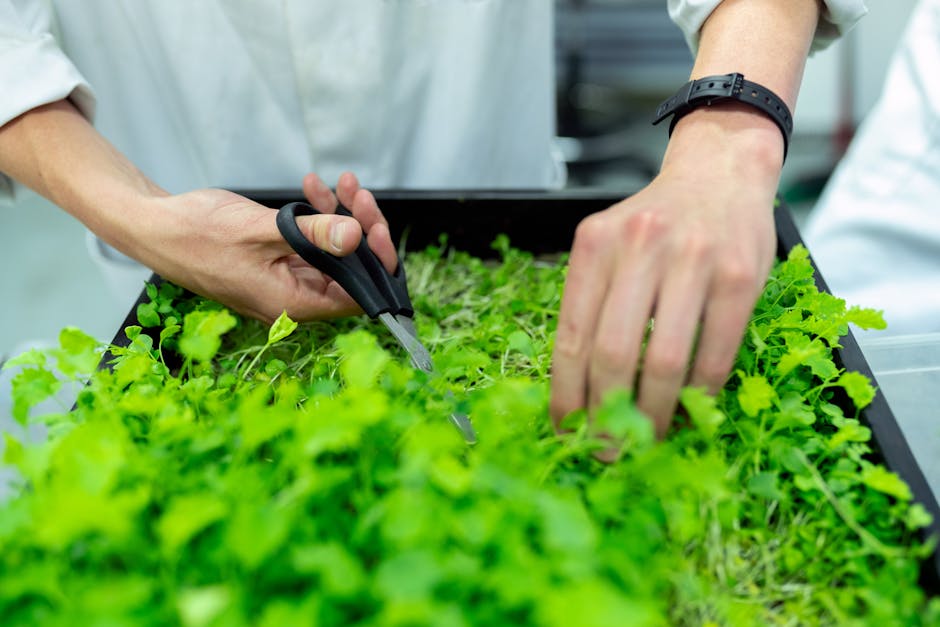
Microgreens are harvested when they have developed their first true leaves, generally between 7 and 21 days after sowing, depending on the species. This is the optimal point where nutrient concentration and flavor are most intense. Sharp kitchen scissors or a knife are used to cut the stems just above the substrate line, ensuring no remnants are left that could rot and contaminate future sowings. Careful harvesting allows for enjoying the freshness and vitality of these tiny vegetables.
Microgreens are recognized for their high nutritional value. Recent scientific studies demonstrate that, compared to their mature counterparts, they can contain up to 40 times more vitamins and antioxidants. For example, broccoli microgreens are rich in sulforaphane, a compound with anti-cancer properties, while radish microgreens provide a significant dose of vitamin C and antioxidants. Their inclusion in salads, sandwiches, smoothies, or as a garnish elevates not only the nutritional profile but also the gastronomic experience. Research into phytochemicals and nutrient bioavailability in microgreens continues to reveal their broad health benefits, solidifying their position as an accessible superfood for the home.
Nutritional Value and Ideal Harvest Time
Growing microgreens at home is a rewarding practice that offers a constant supply of fresh, nutritious vegetables. From meticulous seed selection to controlling environmental conditions and timely harvesting, each stage contributes to a high-quality final product. This form of horticulture not only enriches the diet but also fosters a deeper connection with the food we consume, promoting healthier and more sustainable lifestyle habits in urban environments.
For more information on sustainable cultivation techniques, you can consult the work of institutions such as the National Institute of Agricultural Technology (INTA) in Argentina, which offers valuable resources for family and urban agriculture [https://inta.gob.ar/]. Similarly, platforms like the Food and Agriculture Organization (FAO) of the United Nations provide guides on sustainable food systems and food security [https://www.fao.org/home/es/].
Related Articles

Seed Conservation: Environmental Factors and Techniques for Germinative Longevity
Enhance your seed viability. Discover how humidity, temperature, and light affect seed longevity and learn drying and storage techniques.

Medicinal Herb Cultivation: Botanical Characteristics and Home Garden Applications
Understand the botanical characteristics and practical cultivation methods for popular medicinal herbs, transforming your home garden into a functional apothecary.

Floriography: The Hidden Language of Plants and Its Application in Modern Gardening
Understand the history and meaning of floriography. Learn to use floral symbolism to enrich your garden designs and communication.
Fragaria × ananassa on Balconies: Variety Selection, Substrates, and Environmental Management
Technical guide for growing strawberries in urban environments, covering variety selection, substrates, irrigation, and fertilization.