Integrating Hoverflies in Gardens for Biological Control and Pollination
Attract hoverflies with strategic botanical design: accessible flowers, continuous bloom, and safe habitats for pest control and pollination.

Biological Cycle and Ecological Role of Syrphidae
Integrating beneficial insects into garden and orchard design is fundamental for ecological resilience. Among these natural allies, hoverflies (Syrphidae) stand out for their dual role: adults are efficient pollinators, while their larvae actively prey on pests like aphids. Encouraging their presence through strategic plant selection not only enhances ecosystem health but also reduces reliance on chemical interventions, aligning with current trends in regenerative agriculture and sustainable gardening. Creating an ideal habitat for these insects is a direct investment in the vitality and productivity of any green space.
An analysis of the biological patterns and ecological requirements of hoverflies is essential for their effective integration into cultivation systems. These dipterans exhibit a complex life cycle that includes complete metamorphosis. The larvae of many species are voracious predators of aphids, thrips, and other small, soft-bodied pests, contributing significantly to natural biological control in the garden. Adults, on the other hand, feed exclusively on nectar and pollen, acting as pollinators for numerous plant species, including crops of agronomic importance. Recent studies, such as those published by INTA, underscore the relevance of hoverflies in pollinating horticultural crops in regions like the Humid Pampas. Providing food sources and safe sites for oviposition and pupation is critical for establishing stable hoverfly populations, especially in urban environments where resources can be limited.
Evaluating floral and vegetative characteristics that maximize resource availability for hoverflies in the garden is key. Plant selection should consider floral morphology, as hoverflies, with their short proboscis, prefer open, easily accessible flowers. The Apiaceae family (carrot, parsley, dill) and Asteraceae family (marigold, chamomile, cosmos) are particularly attractive due to their inflorescences composed of numerous small flowers. The color palette preferred by these insects includes yellow, white, and blue. It is crucial to ensure a continuous flowering sequence throughout the growing season to guarantee a constant supply of nectar and pollen. Incorporating native species from the region, such as certain verbenas or senecios, strengthens local biodiversity and ensures better adaptation to climatic and soil conditions. The sustainability of this strategy lies in botanical diversity, offering a varied and constant menu of resources.
Botanical Criteria for Attracting Pollinators
Selecting herbaceous and shrubby species with high attraction capacity, adapted to diverse agroecological environments. To build a garden that invites hoverflies, a combination of aromatic herbs, ornamental flowers, and some vegetables allowed to bloom is recommended. The following table presents a guide of species with proven efficacy:
| Plant Species | Botanical Family | Flower Type | Flowering Season | Key Notes |
|---|---|---|---|---|
| Dill (Anethum graveolens) | Apiaceae | Umbels | Spring-Summer | Excellent source of nectar and pollen |
| Coriander (Coriandrum sativum) | Apiaceae | Umbels | Spring | Attracts hoverflies and other pollinators |
| Parsley (Petroselinum crispum) | Apiaceae | Umbels | Summer | Benefits garden biodiversity |
| Chamomile (Matricaria chamomilla) | Asteraceae | Capitula | Spring-Summer | Small, accessible flowers |
| Marigold (Calendula officinalis) | Asteraceae | Capitula | Spring-Autumn | Prolonged, showy flowering |
| Sunflower (Helianthus annuus) | Asteraceae | Capitula | Summer | Attracts a wide range of beneficials |
| Phacelia (Phacelia tanacetifolia) | Boraginaceae | Cymes | Spring-Summer | Green cover and great attractant |
| Mint (Mentha spp.) | Lamiaceae | Spikes | Summer | Attractive aroma, easy to grow |
| Thyme (Thymus vulgaris) | Lamiaceae | Spikes | Spring-Summer | Tiny flowers, frequently visited |
| Sweet Alyssum (Lobularia maritima) | Brassicaceae | Racemes | Spring-Autumn | Small flowers, attractive groundcover |
The inclusion of varieties with staggered flowering ensures a constant supply of resources. Recent research in urban horticulture promotes the use of wildflower seed mixes, many of them native, to maximize the attraction of hoverflies and other beneficial insects.
Plant Diversity for Beneficial Insect Habitats
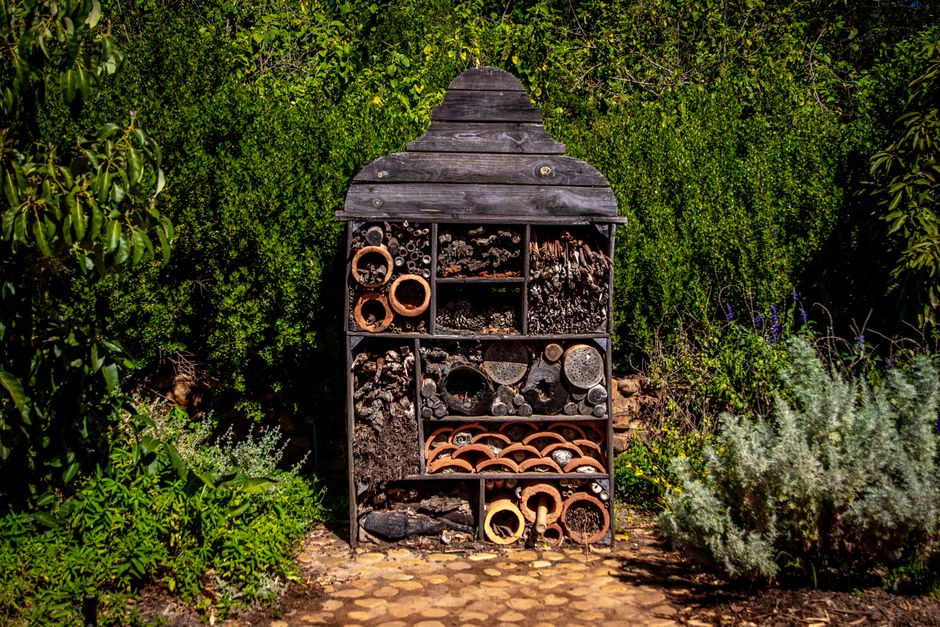
Strategies for implementing and managing green spaces to encourage the colonization and persistence of hoverfly populations. Effective design considers the grouping of attractive plants, creating nectar “corridors” that facilitate hoverfly movement through the garden. Staggered planting of species with different flowering periods ensures a continuous food supply from spring to autumn. It is crucial to avoid the use of broad-spectrum pesticides, even organic ones, as they can negatively affect hoverflies and other beneficial species. Instead, prioritize biological and cultural control methods, such as crop rotation and manual pest removal. Providing small areas with bare soil or leaf litter accumulations offers suitable sites for pupation. Implementing permaculture principles, such as creating living hedges and diversifying plant strata, enhances habitat complexity and makes it more attractive to these insects. Innovations in smart gardening, including moisture sensors and phenological tracking apps, allow for more precise and sustainable management of these spaces.
Promoting hoverflies in our gardens and orchards is a tangible manifestation of commitment to biodiversity and sustainability. Through conscious plant selection and respectful management practices, it is possible to transform any green space into a sanctuary for these valuable insects. The benefits range from more effective pest control to improved pollination, contributing to overall ecosystem health. Adapting these strategies to the specific characteristics of each region, such as the temperate climate of Buenos Aires or the more arid zones of Cuyo, will enhance the success of these gardens. Investing in attractive flora for hoverflies is an investment in the future of our landscapes and food systems.
Learn more about biological pest control in urban gardens
Ecosystem Design and Management for Syrphidae Conservation
Related Articles

Propagation, Management, and Sustainable Cultivation of *Annona cacans*
Examines the soil and climate requirements, propagation techniques, agronomic management, and phytosanitary control of the native fruit species *Annona cacans*.

Dutch Elm Disease: Etiology, Transmission, and Advanced Integrated Management
Combines genetic resistance, vector control, and biotechnology to mitigate devastating Dutch elm disease, ensuring tree health.
Biological Aphid Control for Roses: Natural Agents & Beneficial Fauna
Strategies for defending rose bushes against aphids using natural enemies and creating habitats for beneficial insects.

Plant Adaptation and Garden Design in Dry Shade Microclimates
Enhance your garden with substrate improvement, mulching, irrigation, and resilient species selection for lush landscapes in limited light and water.