Armillaria mellea: Identification, Management & Biocontrol in Green Ecosystems
Morphological and molecular diagnosis of Armillaria mellea, with cultural management, biocontrol, and soil rehabilitation strategies.
Molecular Diagnosis and Early Symptomatology of Armillaria mellea
The health of trees and shrubs in our green spaces, whether orchards, gardens, or parks, is fundamental to their vitality and productivity. However, a silent and persistent threat, Armillaria mellea, commonly known as root rot, can seriously compromise the stability and development of various plant species. Understanding the nature of this fungal pathogen and applying effective management strategies is crucial for preserving the integrity of plant ecosystems.
This organism, a basidiomycete fungus, is responsible for a devastating disease affecting a wide range of woody plants, including fruit trees, ornamentals, and forest species. Its ability to propagate through both spores and subterranean rhizomorphs, root-like structures, makes it a formidable adversary. Early detection and the implementation of appropriate cultural practices are essential to mitigate its impact and protect investments in landscaping and agricultural production.
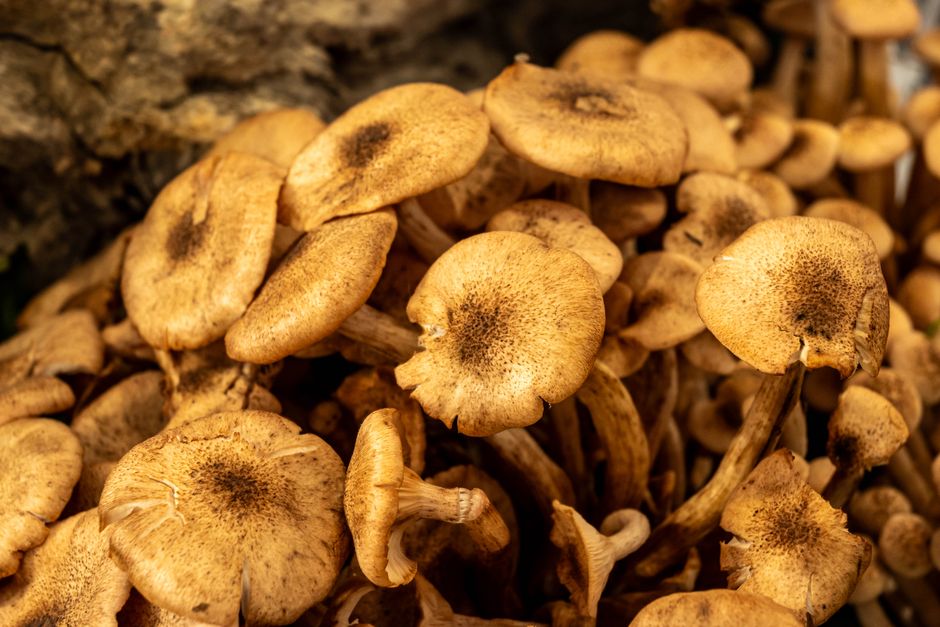
Accurate identification of Armillaria mellea is the first step toward effective management. Initial symptoms are often subtle and can be mistaken for other deficiencies or diseases. Affected plants exhibit general decline, slowed growth, chlorosis (yellowing of leaves), and premature defoliation. In advanced stages, the bark at the base of the trunk and main roots may appear moist and dark, with the appearance of a creamy white, fan-shaped mycelium between the bark and wood. A distinctive sign is the black rhizomorphs, resembling shoelaces, spreading through the soil and over infected roots. During autumn, fruiting bodies (mushrooms) may emerge clustered at the base of trees or shrubs, featuring a honey-colored cap and a ring on the stem.
Cultural Practices for Prevention and Mitigation of Root Rot
Recent research in phytopathology, such as work by INTA in Argentina, is developing molecular diagnostic methods that allow for faster and more precise detection of the pathogen even before visible symptoms manifest, representing a significant advance for prevention and control. Constant observation and periodic inspection of the base of trunks and superficial roots are vital preventive practices.
Cultural management is the cornerstone for preventing and controlling root rot. Selecting plant species resistant or tolerant to Armillaria mellea is a fundamental strategy, especially in areas with a history of the disease. Improving soil drainage is crucial, as the fungus thrives in excessively moist conditions. Preparing raised planting beds or incorporating organic matter to improve soil structure can be very beneficial. Permaculture and regenerative agriculture promote soil health through microbial diversity and reduced disturbance, creating an environment less conducive to pathogens.
The removal of stumps and roots from previously infected trees is an essential preventive measure, as these act as reservoirs for the fungus. Using physical barriers, such as plastic- or metal-lined trenches, around healthy plants can limit the spread of rhizomorphs. In urban gardens and orchards, applying organic mulching with materials like wood chips or mature compost not only suppresses weeds and conserves moisture but also fosters a diverse microbial community that can compete with Armillaria.
Biocontrol Agents and Phytosanitary Alternatives for Soil Fungi
Biological control offers promising alternatives to chemical treatments. Inoculating the soil with antagonistic fungi, such as certain species of Trichoderma or Gliocladium, has shown the capacity to suppress the growth of Armillaria. These microorganisms compete for resources, parasitize the pathogen, or produce antifungal compounds. Some studies explore the use of plant growth-promoting bacteria (PGPR) that can induce resistance in plants or directly inhibit the fungus. Research in plant biotechnology focuses on developing plant varieties with greater genetic resistance to root rot.
For severe cases requiring more direct intervention, chemical treatments based on fungicides are available, which can be applied to the soil or directly to the roots. However, their use should be considered a last resort due to their environmental impact and the potential for resistance development. The current trend leans towards integrated solutions, combining constant monitoring, cultural practices, biological control, and, in specific cases, selective application of low-impact chemical products. In Argentina, the Argentine Chamber of Agrochemicals and Fertilizers (CASAFE) provides information on authorized products and their responsible use.
Once a plant has been affected by Armillaria mellea, rehabilitating the soil and environment is crucial to prevent future infections. Removing the diseased plant, including most of its root system, is indispensable. Subsequently, it is advisable to leave the area fallow for a period, allowing the fungal population to naturally decline. Soil solarization, covering the surface with clear plastic during the warmer months, can help reduce pathogen load by raising soil temperature to levels lethal to the fungus.
Ecosystem Rehabilitation Protocols Post-Infection
Incorporating large quantities of organic matter, such as well-decomposed compost or green manure, improves soil structure, its nutrient-holding capacity, and fosters beneficial microbiology. Crop rotation, especially in garden areas, with species that are not hosts of Armillaria or that even possess biofumigating properties, can contribute to natural soil disinfection. Continuous monitoring and adaptation of management practices are key to maintaining the long-term health of our gardens and orchards against challenges like root rot.
Related Articles

Integrated Management of Fungal Pathogens in Plants: Diagnosis, Biological, and Agronomic Control
Modern strategies for plant fungal disease control, combining precise diagnosis, biocontrol agents, and sustainable agronomic practices.

Legumes: Agricultural Sustainability, Nutrition, and Efficient Cultivation Practices
Master substrate preparation, water management, nutrition, and pest control strategies for optimizing legume cultivation and their role in agroecology.

Home Composting: Microbiological Processes and Agronomic Applications
Exploring the biotransformation of domestic organic waste through composting to enhance soil fertility and sustainability.

Seed Viability: Critical Factors, Advanced Storage, and Climate Resilience
Seed preservation: optimize viability with drying, refrigeration, and monitoring. Secure your genetic heritage.