Lettuce Salinity Management: Diagnosis and Agronomic Strategies
Addresses salinity identification, irrigation techniques, soil improvements, nutrition, and biostimulants for optimal lettuce yield.
Mechanisms of Ionic and Osmotic Toxicity in Lactuca sativa
Lettuce (Lactuca sativa), a fundamental crop in the global diet and a highly demanded vegetable in urban gardens and large-scale productions in Argentina and Latin America, exhibits particular susceptibility to excess salinity. This often underestimated environmental factor can severely compromise crop yield and quality, affecting both small producers and commercial operations. Understanding the mechanisms of salinity action and applying effective management strategies are essential to ensure the viability and productivity of lettuce crops under diverse edaphoclimatic conditions.
Salinity is defined as the excessive concentration of soluble salts in the soil or irrigation water, primarily sodium, calcium, and magnesium chlorides and sulfates. In lettuce, this condition causes osmotic stress, hindering water absorption by the roots, and ionic toxicity, as the accumulation of certain ions interferes with essential metabolic processes. Visible plant symptoms include reduced growth, chlorosis (yellowing) of leaves, leaf margin burn (necrosis), and a general decrease in head size and weight.
The sources of salinity are varied. Irrigation water quality is a primary factor; water with high electrical conductivity (EC) introduces salts directly into the system. Soil type also significantly influences salinity; heavy soils with poor drainage retain salts, while soils with a saline water table can capillary salts to the surface. Inadequate fertilization practices, with the excessive or incorrect application of certain fertilizers, also contribute to salt accumulation.
For effective management, initial assessment is crucial. Periodic analysis of soil and irrigation water to determine their EC and ionic composition is the starting point. Current technology facilitates this task with the development of soil sensors that measure EC in real-time, providing precise data for informed decision-making. You can find more information on soil analysis at INTA Argentina.
The mitigation of excess salinity requires an integrated approach combining various agronomic practices.
Assessment of Electrical Conductivity and Salinity Sources
Water Management and Irrigation Techniques
Irrigation plays a fundamental role. An effective technique is “salt leaching,” which involves applying a volume of water greater than that required by the plant to flush excess salts out of the root zone. However, this practice must be carefully calibrated to avoid water wastage and nutrient leaching.
Drip irrigation is a highly efficient tool in saline environments. It allows water and nutrients to be applied directly to the root zone, minimizing surface evaporation and salt accumulation on the soil surface. Furthermore, by maintaining constant moisture, it reduces plant water and osmotic stress. Irrigation frequency should be higher, with smaller volumes, to avoid drastic fluctuations in salt concentration. Water quality is decisive; whenever possible, using sources with low EC is recommended. More information on efficient irrigation can be found at Infojardín.
Improvements in Soil Structure and Composition
Incorporating organic matter, such as mature compost or vermicompost, improves soil structure, water retention capacity, and cation exchange, which helps buffer the impact of salts. Good drainage is essential to prevent salt accumulation. In heavy soils or those with drainage problems, installing underground drainage systems or creating raised beds can be viable solutions.
Leaching Strategies and Efficient Drip Irrigation
For urban agriculture contexts or in areas with severely affected soils, cultivation in controlled substrates or hydroponic systems offers complete control over the growing medium, allowing precise adjustment of the nutrient solution and avoiding direct interaction with saline soils.
Plant Nutrition and Biostimulants
Fertilizer selection should prioritize those with a low salt index. Fertigation, which combines irrigation and fertilization, allows precise and controlled nutrient application, reducing the risk of excessive salt accumulation. It is crucial to adjust dosages according to the specific needs of lettuce at each developmental stage and soil analysis results.
A growing trend in horticulture is the use of biostimulants and beneficial microorganisms. Products based on algae extracts, humic and fulvic acids, or plant growth-promoting rhizobacteria (PGPR) can enhance lettuce tolerance to salinity stress, boosting nutrient uptake and the plant’s antioxidant response. Recent research at INTA explores lettuce varieties with greater genetic tolerance to salinity, a promising advancement for production in arid zones.
Precision agriculture offers valuable tools for salinity management. Soil EC sensors, connected to monitoring systems and agricultural management platforms, allow continuous tracking and irrigation automation, optimizing water use and minimizing salt accumulation.
Substrate Modification and Hydroponic System Cultivation
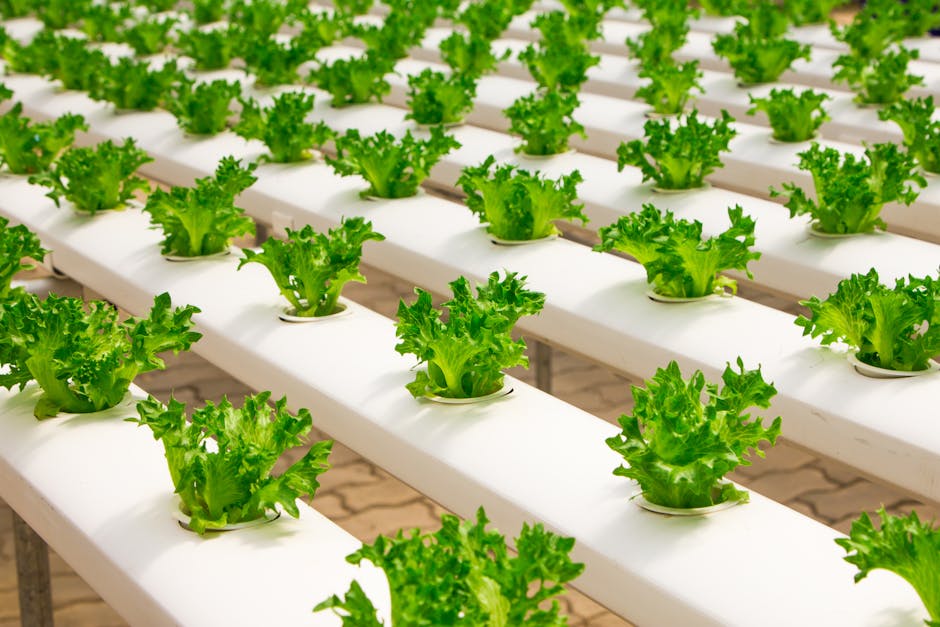
Soilless cultivation systems, such as hydroponics and aeroponics, are particularly advantageous. By operating in a closed loop with controlled nutrient solutions, the problem of soil salinity is eliminated, and water is recycled, which is crucial in regions with limited water resources. Urban vertical farming, an innovation gaining traction in major cities like Buenos Aires, integrates these technologies to produce high-quality lettuce in reduced spaces, with exhaustive environmental and nutritional control that includes active salinity management. You can explore more about hydroponics at Hydroponics.com.
The use of collected rainwater or, in scenarios of high salinity and available resources, reverse osmosis systems to purify irrigation water, represent extreme yet effective solutions to ensure water quality. Investment in these technologies is justified by the substantial improvement in productivity and final product quality.
The adoption of these strategies, from preventive analysis to the implementation of advanced technologies and the use of tolerant varieties, forms a robust framework for addressing the challenge of excess salinity in lettuce cultivation. Modern horticulture, in its pursuit of sustainability and efficiency, integrates these innovations to ensure the production of quality food in a context of variable resources and environmental conditions.
Effective management of excess salinity in lettuce cultivation is a cornerstone for the sustainability and profitability of horticultural production. A proactive approach, based on constant monitoring of soil and water conditions, the application of appropriate irrigation techniques and organic amendments, and the incorporation of technological advances such as sensors and soilless cultivation systems, allows for the mitigation of adverse salt effects. The integration of biostimulants and the selection of varieties with greater genetic tolerance open new avenues for strengthening lettuce resilience. Adapting to local conditions and embracing innovation are key to ensuring abundant, high-quality harvests, contributing to food security in our regions.
Related Articles

High-Altitude Horticulture: Adaptation and Sustainability in the Colca Canyon
Farming strategies in the Colca Canyon: adapting to extreme altitude, managing volcanic soils and water, and employing ancestral/modern techniques.

Integrated Management of Lettuce Downy Mildew (*Bremia lactucae*)
Cultural, genetic, biological, and technological strategies to control lettuce downy mildew, minimizing environmental impact and ensuring harvests.

Integrated Management of Phytopathogenic Fungi: Diagnosis, Strategies, and Predictive Technologies
Addresses plant mycosis control through diagnosis, cultural practices, biocontrol, and technological innovations for plant health.

Home Hydroponics: Efficient Vegetable Cultivation in Small Spaces
Learn how hydroponics enables growing fresh food at home, optimizing water and space. A practical guide for beginners.