Children's Gardening: Species Selection, Substrates, and Innovative Planting Methods
Master plant selection, substrate preparation, and planting techniques for children's gardens, fostering learning and ecological awareness.
Species Selection and Substrate Preparation for Children’s Introduction
Connecting with nature is fundamental for the holistic development of children. Gardening offers a playful and educational space where the little ones can explore life cycles, understand the importance of environmental care, and develop motor and cognitive skills. Encouraging this activity from an early age helps sow ecological awareness and deep respect for the environment, transforming a backyard or balcony corner into a living laboratory for learning. Gardening for children transcends the simple act of planting; it is a methodology for building resilience, patience, and a sense of responsibility, key elements in their personal growth.
Species Selection and Substrate Preparation for Children’s Introduction
Choosing suitable plants for children: fast-growing, low-maintenance species that ensure initial success and motivation.
To introduce children to horticulture, the selection of plant species is a determining factor in maintaining their interest. It is recommended to opt for plants with rapid and visible growth cycles, or those that offer fruits or flowers accessibly. Species like radishes, which germinate and mature in a few weeks; lettuce and spinach, which are easy to grow and harvest; or strawberries, which provide a sweet reward, are excellent choices. Sunflowers, with their imposing size and edible seeds, also capture attention. Likewise, aromatic herbs such as mint or basil allow interaction with textures and aromas, adding a sensory dimension to learning.
The substrate forms the nutritional base for any crop. For children’s projects, it is crucial to use a light, nutrient-rich mixture with good drainage. An ideal combination includes garden soil, organic compost, and perlite or vermiculite, which ensures adequate aeration and moisture retention without compaction. Preparing this substrate can be a shared activity, explaining the function of each component and the importance of compost as a natural fertilizer, reducing reliance on chemicals. Using certified organic substrates, available at specialized nurseries or platforms like Verdecora, ensures a healthy and sustainable base for the plants. Containers can be as varied as imagination allows: from traditional pots to recycled containers like cut plastic bottles, cartons, or even painted old tires, fostering creativity and upcycling.
Implementing Seedlings and Vertical Gardens for Children
Implementing Seedlings and Vertical Gardens for Children
Simple planting projects for children: creating seedlings and vertical gardens that maximize space and stimulate creativity.
Creating seedlings is a fascinating first step in a plant’s life cycle. Using everyday materials like cardboard egg cartons, yogurt cups, or toilet paper rolls, children can plant large, easy-to-handle seeds, such as pumpkin, bean, or lentil seeds. This process teaches patience and observation while waiting for germination. Once the seedlings have grown sufficiently, transplanting them to their permanent location becomes an exciting new stage.
Vertical gardens represent an innovative solution for optimizing space, especially in urban environments with small balconies or patios, a growing trend in cities like Buenos Aires. Projects with stacked recycled plastic bottles or transformed wooden pallets are accessible examples that children can help build and decorate. These systems not only maximize growing area but also introduce concepts of design and efficiency. The initiative by La Huertina de Toni offers practical examples for these types of structures.
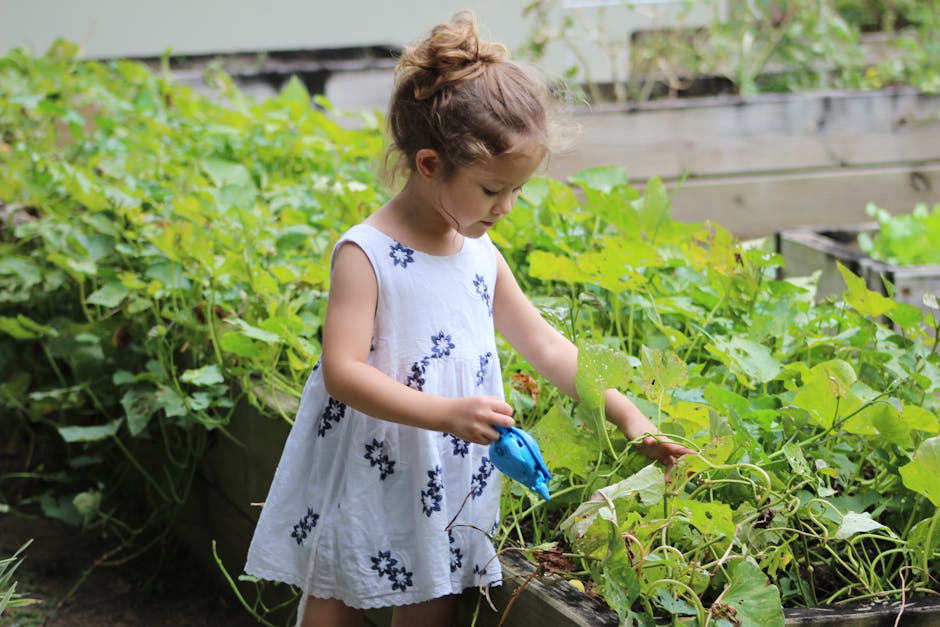
Regarding watering, it is essential to teach children the importance of moderation. Using small watering cans or spray bottles allows them to control the amount of water and observe how the substrate absorbs it. Furthermore, the integration of simple technology, such as small self-watering kits or basic moisture sensors connected to children’s gardening mobile apps, can turn care into an interactive game, introducing children to technological advancements applied to agriculture. Recent studies on the gamification of environmental education show a significant increase in learning retention and motivation in children, justifying the incorporation of these tools.
Efficient Watering Strategies and Biological Pest Control in Children’s Cultivations
Efficient Watering Strategies and Biological Pest Control in Children’s Cultivations
Sustainable management of children’s gardens: conscious watering techniques and natural methods to protect plants from common pests.
Sustainable garden management is a crucial lesson in environmental responsibility. Teaching children to water efficiently involves observing soil moisture before adding water and understanding that excess can be as detrimental as a lack. Implementing mulching with dry leaves, straw, or wood chips around the plants helps retain moisture, reduce evaporation, and control weeds, decreasing the need for frequent watering and promoting soil health.
Biological pest control offers an educational and ecological alternative to chemical pesticides. Children can be introduced to the fascinating world of “friendly insects,” such as ladybugs, which feed on aphids, or lacewings. Planting companion species that repel pests, like marigolds or tagetes, is an effective and colorful strategy. Preparing natural insecticides, such as garlic infusions or potassium soap solutions (always under adult supervision), allows them to actively participate in protecting their crops. Regular observation of plants, looking for signs of pests or diseases, fosters a deeper connection with the garden’s ecosystem. This approach aligns with permaculture principles, which aim to create self-sufficient and balanced agricultural systems, promoting biodiversity and resilience in the garden. Recent research published in the Journal of Environmental Education underscores how direct interaction with diverse ecosystems enhances children’s understanding of nature’s interconnectedness and fosters lasting pro-environmental attitudes. More information on these practices can be found on sites like Infojardin.
Gardening for children is an invaluable pedagogical tool. Beyond growing plants, this activity cultivates curious minds, active hands, and conscious hearts. From seed selection to harvest, each stage of the process offers lessons in patience, perseverance, and the natural cycle of life. By integrating sustainability principles, such as composting and biological control, future generations are prepared to be responsible stewards of our planet. Introducing children to horticulture is not just a pastime; it is an investment in their personal development and in the future of a greener, more conscious world.
Related Articles

Rain Gardens: Sustainable Water Management and Urban Biodiversity
Learn how rain gardens manage urban water, improve water quality, and foster biodiversity.

Pink Trumpet Tree: Ecology, Propagation & Urban Biodiversity
Details ecology, seed and mycorrhizal propagation, and water-nutritional management of the Pink Trumpet Tree for landscape restoration and resilience.

Domestic Medicinal Gardens: Cultivation, Sustainability, and Technological Monitoring
Master cultivation, propagation, and biological control techniques for medicinal plants, integrating permaculture and sensors to optimize your garden.

Plant-Insect Chemical Ecology: Signals, Responses, and Agricultural Applications
Investigating the chemical dialogue between plants and insects, its mechanisms, and applications for sustainable horticulture and pest management.