Drip Irrigation: Water and Agronomic Efficiency for Sustainable Crops
Enhance water use and enhance agricultural productivity with drip irrigation systems. Minimize losses and promote resilient crops.
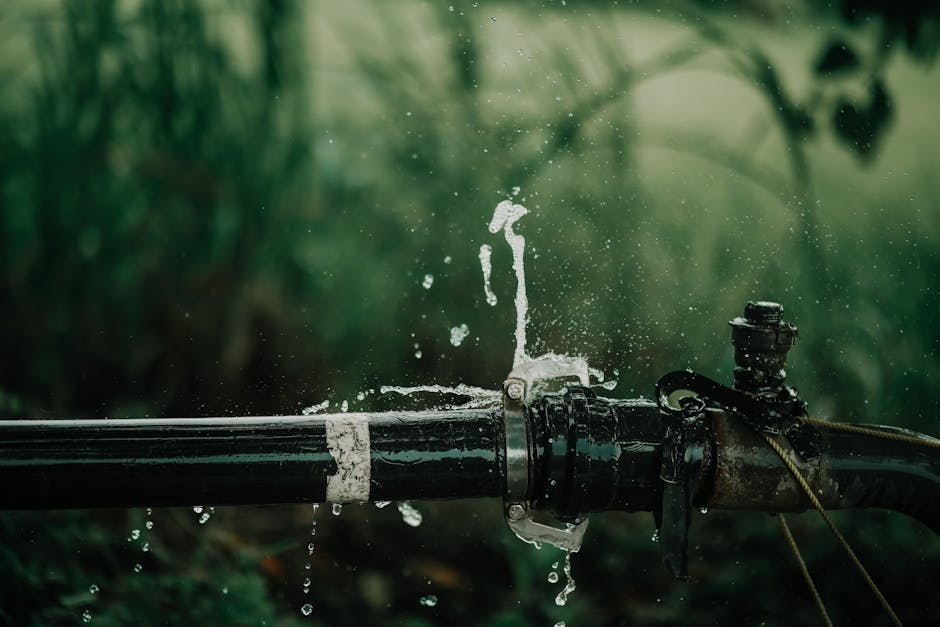
Fundamental Principles of Drip Irrigation
Efficient water management presents a constant challenge for horticulturists and gardeners, especially in regions with limited water resources. In this context, drip irrigation emerges as a fundamental strategy for optimizing water use and improving crop productivity. This method, which delivers water directly to the plant’s root zone, minimizes losses from evaporation and runoff, contributing to more sustainable and resilient agriculture. Its implementation is increasingly relevant given changing climate patterns and growing awareness of water conservation in urban and rural agriculture.
Operational Principles of Drip Irrigation
Drip irrigation, also known as localized irrigation or micro-irrigation, is based on the slow and precise application of small amounts of water onto or below the soil surface, directly into the plant’s root zone. The system consists of a network of main, secondary, and tertiary pipes that transport water from a source to emitters or drippers. These devices, designed to release specific flow rates, ensure uniform and controlled water distribution. System pressure is a critical factor; it requires proper regulation to ensure all emitters function at their optimal capacity, preventing variations that compromise irrigation uniformity. Water filtration before the emitters is essential to prevent clogging, especially with well or surface water that may contain particles.
Hydrological and Agronomic Benefits of the Drip System
The adoption of drip irrigation offers multiple advantages in both hydrological and agronomic aspects. The primary benefit is a significant reduction in water consumption, which can range from 30% to 70% compared to traditional irrigation methods like sprinkler or flood irrigation. This water efficiency translates into a lower environmental impact and greater sustainability. Agronomically, the direct application of water and nutrients (fertigation) to the root zone minimizes fertilizer leaching and optimizes plant nutrient uptake, promoting more vigorous growth and higher yields. Furthermore, by keeping the foliage surface dry, the incidence of fungal diseases and weed growth is significantly reduced, as weeds do not receive the water necessary for proliferation. This characteristic is vital in preventing pathogens such as downy mildew or botrytis, improving plant health. Recent studies at the National University of La Plata demonstrate that drip systems with soil moisture sensors can increase horticultural crop yields by 20% compared to manual irrigation, optimizing the timing and volume of water applied according to the crop’s actual needs.
Components and Design of a Drip Installation
Planning is crucial for the correct implementation of a drip irrigation system. The basic components include:
- Water source: This can be a household tap, a storage tank, or a pump.
- Filtration: Essential to prevent dripper clogging. Mesh or disc filters are common.
- Pressure reducer: Adjusts water pressure to optimal levels for the drippers (generally between 1 and 2 bar).
- Main pipe (header): Distributes water from the source to the secondary lines. Usually made of PVC or polyethylene with a larger diameter.
- Secondary lines (laterals): Smaller diameter pipes, typically 16 or 20 mm polyethylene, where the drippers are inserted.
- Drippers/Emitters: Devices that release water drop by drop. They can be integrated into the pipe or inserted manually. Pressure-compensating drippers are available, ideal for uneven terrain, as they maintain a constant flow rate.
- Accessories: Connectors, elbows, tees, end caps, and flush valves.
For design, the cultivation area must first be mapped, identifying plant locations and their water requirements. Then, the total required flow rate is calculated, and suitable drippers are selected, considering their flow rate and spacing. An optimal design ensures an application uniformity of over 90%, a determining factor for crop success. Recent innovations include subsurface drip irrigation (SDI) systems, which further minimize evaporation and allow for irrigation of deeper roots, being particularly useful in large-scale farming or in areas with high solar radiation.
Implementation and Maintenance for Water Efficiency
The installation of a drip system can be completed in a few hours for small gardens. It begins by connecting the filter and pressure reducer to the water source. Subsequently, the main pipe is laid out, and the secondary lines are branched off, securing them to the ground with stakes. Finally, the drippers are installed according to plant spacing. It is advisable to conduct a system test to verify the absence of leaks and the correct water emission from each dripper.
Maintenance is key to prolonging the system’s lifespan and efficiency. This includes periodic cleaning of filters, especially if water with sediment is used. It is also important to check drippers for blockages or damage. In case of blockages, some drippers are removable for cleaning, while others require the application of acidic or chlorinated solutions to dissolve mineral deposits or algae. Flushing the pipes at the end of each irrigation cycle or season is essential to remove sediment. The integration of smart irrigation controllers, which connect to soil moisture sensors and weather forecasts, represents a growing trend to further optimize irrigation scheduling, automatically adapting to environmental conditions and plant water needs.
Drip irrigation is an indispensable tool for modern horticulture, offering an effective solution to water management challenges. Its ability to deliver water and nutrients precisely, along with its agronomic and environmental benefits, positions it as a profitable and sustainable investment for any gardener or producer. Continuous technological evolution, with increasingly intelligent and efficient systems, ensures that drip irrigation will remain a fundamental pillar in the pursuit of more sustainable and resilient food production.
Related Articles

Home Composting: Sustainable Nutrition for Soil and Plants
Learn how to transform organic waste into high-quality fertilizer to revitalize your garden ecologically.

Cucurbita Maxima: Comprehensive Management for Successful and Sustainable Harvests
Soil preparation, planting, irrigation, nutrition, and phytosanitary control techniques to optimize squash production.

Solanum Lycopersicum: Soil Analysis, Genetics, and Agronomic Management for Modern Gardens
Enhance tomato cultivation through soil analysis, genetic selection, propagation, and sustainable water-nutrient management.
Ecological Pest Control: Integrated Methods for Sustainable Urban Gardens
Master preventive, biological, botanical, and cultural strategies for chemical-free pest management, fostering resilient garden ecosystems.