Legumes in the Garden: Soil Fertility and Family Nutrition
Learn how growing beans, peas, and lentils improves your soil and diet. A practical guide for gardeners.
Cultivation and Varieties of Beans (Phaseolus vulgaris)
Legumes, fundamental pillars of human nutrition and invaluable allies in the sustainability of any garden, represent an essential component for those seeking to optimize their crops and enrich their family’s diet. Their ability to fix atmospheric nitrogen into the soil, a vital biological process, positions them as natural fertility enhancers, reducing the need for synthetic fertilizers. Integrating beans, peas, and lentils into the design of a home garden not only guarantees a low-cost source of protein and fiber but also contributes to the health of the soil ecosystem. This article explores the key considerations for the successful cultivation of these species in domestic settings, adapted to the conditions of our region.
The diversity of beans (Phaseolus vulgaris) offers options for all tastes and needs. From classic white beans, ideal for stews and salads, to black beans, highly appreciated in Latin American gastronomy, or the impressive lima beans, each variety has its charm. Bean planting is generally done in spring, once the risk of frost has passed and the soil temperature exceeds 15°C (59°F). Seeds are placed at a depth of 3-5 cm (1-2 inches), maintaining a spacing of 10-15 cm (4-6 inches) between plants and 60-90 cm (2-3 feet) between rows, depending on whether they are bush or pole varieties. Pole varieties require supports or trellises for optimal development, which allows for better aeration and facilitates harvesting. Watering should be regular, especially during flowering and pod development, avoiding waterlogging. Careful observation is crucial for controlling common pests such as aphids or spider mites. The harvest of fresh beans begins when the pods are full and turgid, while for dry beans, one waits until the pods dry completely on the plant. Detailed information on varieties and care can be found in resources like Infojardín, which offers a broad database on horticulture: https://www.infojardin.com/.
Characteristics and Sowing of Peas (Pisum sativum)
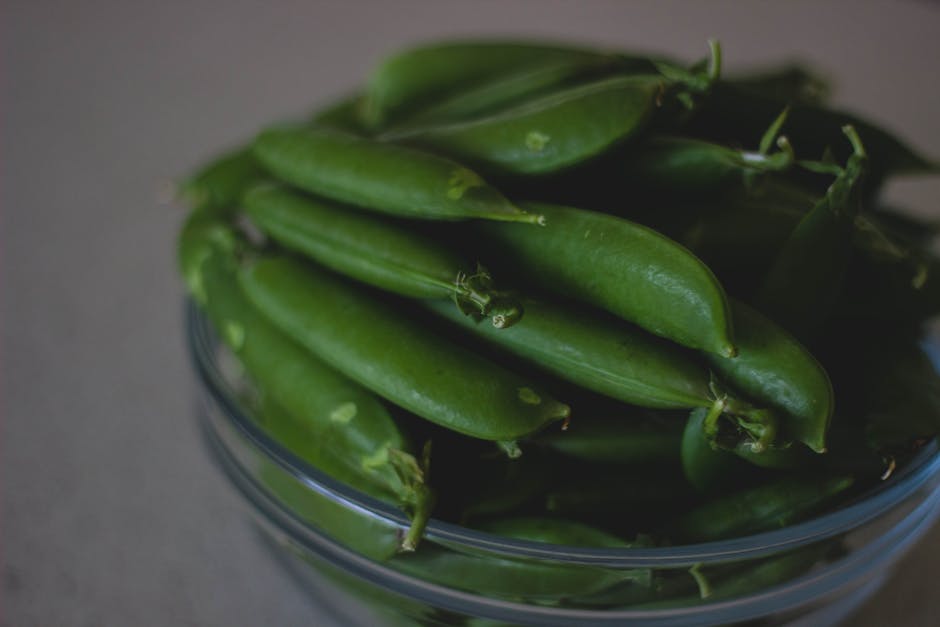
Peas (Pisum sativum), with their characteristic sweetness, are another fundamental legume for the garden. They are mainly distinguished between climbing and dwarf varieties, and also by the type of pod: shelling peas (where only the seeds are eaten) and edible-pod peas, such as snap peas or snow peas. Unlike beans, peas prefer cooler climates, so their ideal sowing time in the region is usually late winter or early spring, or even in autumn in areas with mild winters. Seeds are planted at a depth of 2-3 cm (around 1 inch), with a spacing of 5-8 cm (2-3 inches) between them and about 40-60 cm (1.3-2 feet) between rows. Climbing varieties, like pole beans, benefit greatly from supports to guide their vertical growth, which prevents fungal diseases by improving air circulation. Constant watering is essential, especially during flowering. Harvesting is done when the pods are well-swollen but still tender and bright green, before the seeds become starchy. A reference blog like La Huertina de Toni can offer practical tips for growing peas: https://lahuertinadetoni.es/.
Lentils (Lens culinaris) are perhaps the least demanding of the three legumes in terms of cultivation, making them an excellent choice for gardens with less fertile soil or water restrictions. Their sowing can be done in both autumn and early spring, depending on local climatic conditions. Lentil seeds are sown shallowly, at a depth of 2-3 cm (around 1 inch), in rows spaced about 30-40 cm (1-1.3 feet) apart. Once established, they require little maintenance. Initial weeding is important to avoid competition, but after that, their dense foliage usually suppresses weeds. Watering should be moderate; lentils are drought-tolerant, although some water during pod-filling can improve yield. Harvesting is done when the plants dry out and the pods become brittle, usually in summer. It is a process that requires patience, but the reward of harvesting fresh lentils is unparalleled.
Lentils (Lens culinaris): Cultivation and Environmental Tolerance
Regardless of the chosen legume, some general practices optimize yield and garden health. Soil preparation is fundamental: legumes prefer well-drained soils with a pH close to neutral. Crop rotation is a key strategy: planting legumes after nitrogen-demanding crops, such as corn or broccoli, allows for the utilization of the nitrogen contribution to the soil. The symbiosis of legumes with bacteria of the genus Rhizobium in their roots is the mechanism by which they fix nitrogen, a fascinating and beneficial process. Integrated pest management, prioritizing biological and cultural methods, is always recommended. Maintaining constant soil moisture, without excess, is vital for root development and pod production. Growing legumes at home is a rewarding experience that connects the gardener with natural cycles and provides fresh, nutritious produce for the table.
The inclusion of beans, peas, and lentils in the home garden represents a minimal investment with significant returns, both in the quality of the diet and in improving soil fertility. The ease of their cultivation, along with their multiple agronomic and nutritional benefits, makes them ideal candidates for any gardener, from beginner to experienced. By adopting these practices, one contributes to a more resilient and productive farming system, enjoying abundant and flavorful harvests that enrich the table and the soil sustainably.
Agronomic Practices for Legume Optimization
Related Articles

Rose Pruning: Key Techniques for Blooming and Health in Argentina
Essential guide on when and how to prune roses for spectacular blooms and vigorous plants in Argentina's climate.
Unlocking Bumper Harvests: Your Essential Guide to Thriving Homegrown Tomatoes
Master the art of cultivating luscious tomatoes with this comprehensive guide, covering everything from soil to harvest for a bountiful yield.

Companion Planting: Ecological Interactions for Resilient Gardens
Learn how companion planting mimics natural ecosystems, improving soil health and pest control.
Home Organic Garden: Planning, Living Soil, and Sustainable Cultivation Principles
Learn to plan, prepare soil, and use sustainable techniques for a successful, productive home organic garden.